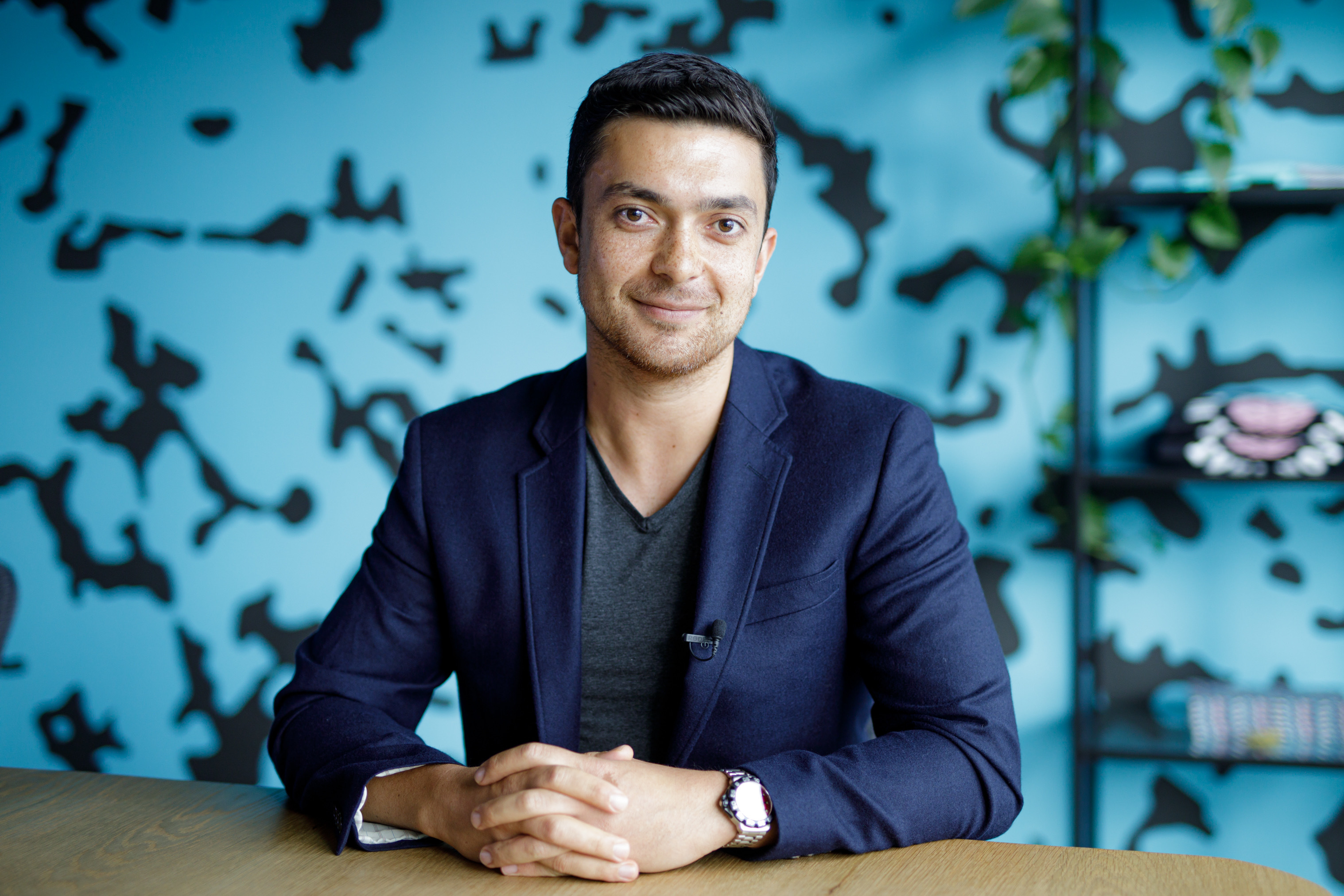
Chief Executive Officer
Work.Life
I fell in to my first roles, initially in Marketing and promotions, and latterly in General Management, within the Hospitality sector. As such, I never thought of any of my roles as purely operations - they were highly commercial, and blended sales and marketing, financial understanding, customer service, team leadership, and operations - in pretty dynamic and unforgiving environments. What I think that taught me was the ability to understand the whole system, and how the operational 'machinery' can affect the ultimate goals of the organisation; and how that interplays with and supports the other core functions of a business to create the 'whole'. I joined Work.Life as Head of Operations, initially responsible for the performance and operations of our workspace locations, which grew into an org-wide Chief Operating Office role, and now CEO.
For me now, my role is more about 'next year' than 'next week', and to do this, I need to be able to create space to think and work strategically: to look around corners and set out direction of travel, and then connect those dots back to where we are today. To do that effectively, I need (and have) an exceptional team, and a well-structured operating system and rhythm across the business that means we can work both individually and in our functions, and as a joined up unit, against the same goals. I do this without a COO or equivalent in the team, so I take responsibility for that system, and work with various members of our Leadership Team to manage it well. With that in place, I can design my weeks primarily around my priorities - what outcomes do I need to create this week - and what does that mean for focus time, collaboration time, resources and so on. That sits on top of the underlying business framework that we all work to (team meetings, shared reporting input and so on).
We build a community of over 8,000 members and 14 wonderful locations at Work.Life, and I feel we're just getting started. Not to mention the wonderful Work.Lifers - on our team and amongst our membership - who I've had the pleasure of watching (and hopefully somewhat helping) flourish along the way.
My number one skill is the ability to learn new things, quickly operationalise them, and iterate or adapt them to work for what I need (or put them aside if not). Learning to learn is the most valuable thing I've worked on in the last few years.
My most important process is my quarterly, monthly and weekly review and reset discipline. This allows me to continually draw throughlines between what we are trying to achieve in the big picture sense, and what I'm doing each day and/or week towards that. Another couple of tools I love are - Evernote - which I use as an 'external hard drive' for my brain - Asana - for team, project and roadmap coordination - FollowUpThen.com - for three-dimensional task management (what AND when) P.S. if you're an optimiser and you haven't read Ari Meisel’s Less Doing, More Living - you're in for a treat.
I think my experience at the sharp end of hospitality helped me develop an emotional and stoic resilience that has served me well down the road. I'm a huge believer in process goals: focusing on what you can control, breaking that down to basics, delivering consistently on them every day, and having the courage of your conviction and the staying power to see the output of that come to fruition. When things become chaotic or difficult, I refocus on what I, or my team, can actually do about it, and then just to do those things excellently and repeatedly. There's no point wasting energy or emotion on what is outside of your circle of control.
Great operations leaders own the 'machine' responsible for reliably producing the outcomes that the organisation is aiming for. To do this well, you have to really understand those organisational goals, and be able to effectively reverse engineer the machinery - people, processes and systems - required to produce them. This often calls for usually disparate skill sets - for example, a great operations leader is both an astute and objective systems thinker, and an articulate, empathetic people connector.
Ops is not a function. It is the connective tissue that moves between all the functions. Therefore, in a systemic sense, everyone is an operator, and everything is an operation of sorts. (I'm not sure if that's controversial!)
As both people and technology evolve, the skill of Ops to bring it all together effectively becomes more rare, and more valuable. Because of the pace at which change is happening, Ops means being at the cutting edge of how value gets created and how good work gets done. To me, this is really exciting, and underscores how valuable a great operational mind is in any endeavour.
Learn to learn, and have a bias to action - you'll accomplish so much more in the doing and learning than in trying to come up with the perfect solution. And don't forget to have fun!